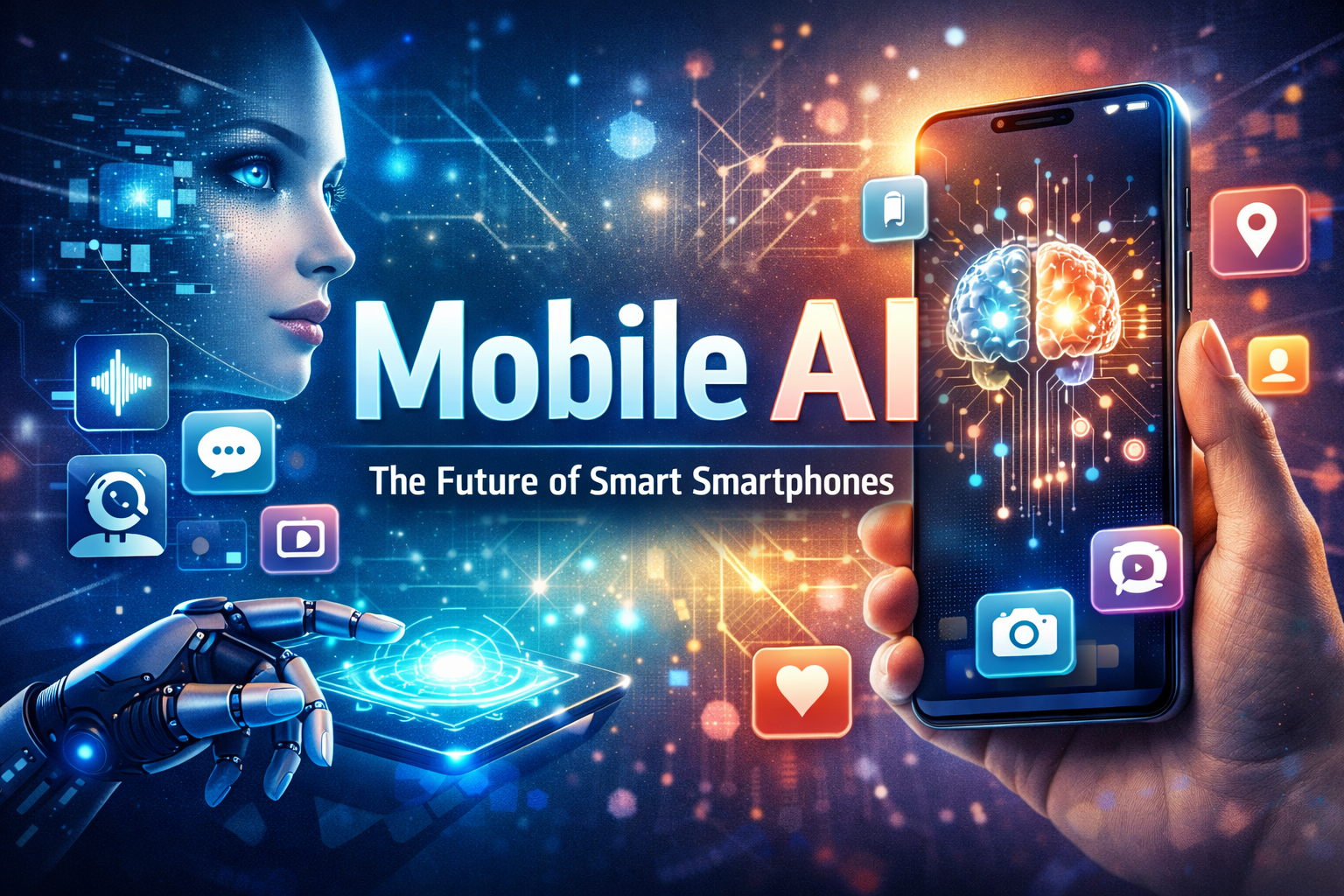
Mobile AI has become the most influential force in modern mobile technology. Smartphones are no longer just communication devices; they are intelligent assistants capable of understanding language, recognizing images, predicting user behavior, and automating daily tasks. With advances in on-device processing and cloud-based intelligence, AI in smartphones is reshaping how users interact with mobile apps, operating systems, and digital services.
Unlike traditional AI systems that rely heavily on powerful servers, mobile artificial intelligence focuses on delivering smart features directly on handheld devices. This shift is driven by faster mobile chipsets, neural processing units (NPUs), and optimized machine-learning models designed specifically for mobile environments.
What Is Mobile AI?
Mobile AI refers to the integration of artificial intelligence technologies into smartphones, tablets, and mobile applications. It includes capabilities such as machine learning, natural language processing, computer vision, and predictive analytics, all optimized for mobile hardware.
Key components of mobile AI technology include:
- On-device machine learning models
- AI-accelerated processors
- Smart sensors and cameras
- Cloud-assisted AI services
By combining these elements, mobile devices can deliver real-time intelligence while maintaining speed, privacy, and energy efficiency.
Why Mobile AI Is the Most Important Mobile Technology Today
Among Android, iOS, apps, and smartphone software advancements, mobile AI innovation stands out because it enhances every other category. AI does not replace mobile platforms; it powers them.
Here’s why AI mobile technology leads the industry:
- It improves user experience across all apps
- It enables smarter operating systems
- It supports personalization at scale
- It drives automation and productivity
- It enhances security and privacy features
From camera enhancements to voice assistants, AI-powered mobile features are now a core expectation rather than a luxury.
Mobile AI in Smartphones
AI Processors and On-Device Intelligence
Modern smartphones include dedicated AI hardware such as NPUs or AI engines. These processors allow on-device AI to perform complex tasks without relying on the internet.
Benefits of on-device mobile AI:
- Faster response times
- Better data privacy
- Reduced battery consumption
- Offline AI functionality
This hardware evolution enables smartphones to perform face recognition, real-time language translation, and image processing instantly.
AI Cameras and Computational Photography
One of the most visible uses of mobile AI is in smartphone cameras. AI algorithms analyze scenes, detect subjects, adjust lighting, and enhance images automatically.
AI camera features include:
- Scene detection
- Portrait background blur
- Night mode enhancement
- Object removal
- Real-time video stabilization
These features rely on computer vision AI, making professional-level photography accessible to everyday users.
Mobile AI in Apps
AI-Powered Mobile Apps
AI mobile apps are transforming how users work, learn, and communicate. From productivity tools to entertainment platforms, AI adds intelligence that adapts to individual behavior.
Common examples of mobile AI applications:
- Smart note-taking apps
- AI photo and video editors
- Voice-controlled assistants
- Language translation apps
- Fitness and health tracking tools
These apps use machine learning on mobile to personalize recommendations and automate repetitive tasks.
AI Personalization in Mobile Apps
Personalization is a key strength of mobile AI systems. Apps learn user preferences over time and adjust content, notifications, and features accordingly.
AI-driven personalization improves:
- User engagement
- App retention
- Content relevance
- Conversion rates
For businesses, AI in mobile apps enables data-driven decisions without overwhelming users.
Mobile AI and Operating Systems
AI in Android and iOS
Both major mobile operating systems rely heavily on AI-powered OS features. AI enhances system performance, battery management, security, and accessibility.
Examples of AI in mobile operating systems:
- Adaptive battery optimization
- Smart app suggestions
- Spam and fraud detection
- Voice recognition
- Accessibility tools for users with disabilities
Through continuous learning, AI-based mobile OS features become smarter over time.
AI for Mobile Security
Security is another critical area where mobile AI excels. AI systems can detect unusual behavior, malware, and phishing attempts in real time.
AI mobile security features include:
- Facial and fingerprint recognition
- App behavior monitoring
- Fraud detection
- Secure authentication
By analyzing patterns instead of static rules, AI-driven mobile security offers stronger protection against evolving threats.
Mobile AI and Productivity
AI Assistants on Mobile Devices
Mobile AI assistants help users manage tasks, set reminders, schedule meetings, and answer questions using natural language.
These assistants rely on:
- Natural language processing
- Speech recognition
- Contextual awareness
As AI assistants on smartphones become more advanced, they act as personal productivity partners rather than simple command tools.
AI Automation on Mobile
Mobile AI automation allows users to complete complex workflows with minimal effort. AI can automatically organize photos, summarize text, suggest replies, and manage notifications.
Key benefits of AI automation on smartphones:
- Saves time
- Reduces cognitive load
- Improves efficiency
- Enhances multitasking
This makes smartphones more useful for both personal and professional tasks.
The Role of Mobile AI in Business and Development
AI for Mobile App Developers
For developers, mobile AI frameworks simplify the integration of intelligent features into apps. Developers can build smarter apps without creating AI systems from scratch.
Advantages of AI in mobile app development:
- Faster innovation
- Better user insights
- Improved app performance
- Competitive differentiation
As demand for intelligent apps grows, mobile AI development becomes a key skill in the tech industry.
AI Mobile Tools for Businesses
Businesses use AI mobile tools to improve customer experience, analyze user behavior, and optimize operations.
Use cases of AI mobile solutions:
- Customer support chatbots
- Sales and marketing analytics
- Personalized shopping experiences
- Employee productivity tools
Mobile AI helps businesses deliver value directly through smartphones, where users spend most of their digital time.
Challenges of Mobile AI
Despite its advantages, mobile AI technology faces several challenges:
- Limited battery life
- Hardware constraints
- Data privacy concerns
- Model optimization complexity
Balancing performance and efficiency is essential for sustainable AI in mobile devices. Continuous improvements in chip design and software optimization are addressing these issues.
The Future of Mobile AI
The future of mobile AI innovation points toward more autonomous, context-aware, and personalized smartphones.
Expected trends in future mobile AI:
- Fully on-device generative AI
- Smarter real-time assistants
- Advanced AI health monitoring
- Deeper integration across apps
- AI-driven mobile creativity tools
As AI models become more efficient, smartphones will evolve into intelligent companions capable of anticipating user needs.
Conclusion
Mobile AI is the most powerful and transformative topic in mobile technology today. It enhances smartphones, apps, operating systems, and user experiences across every level. From AI cameras and security features to intelligent apps and automation, AI in mobile technology defines the present and future of digital interaction.
As mobile hardware advances and AI models become more efficient, mobile artificial intelligence will continue to lead innovation in the smartphone ecosystem. For users, developers, and businesses alike, understanding and leveraging mobile AI solutions is no longer optional—it is essential.