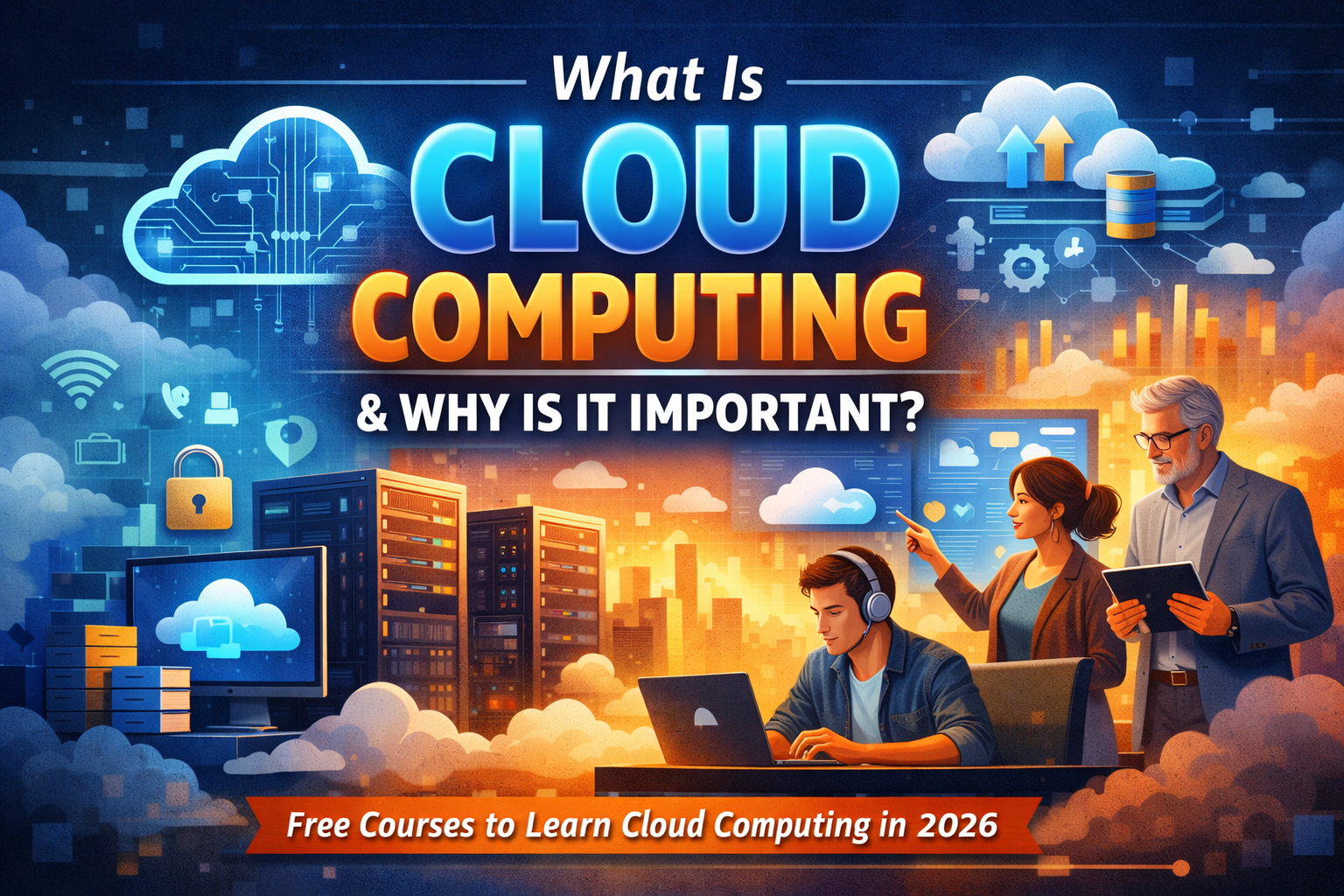
In today’s digital-first world, cloud computing has become the backbone of modern technology. From startups to global enterprises, businesses rely on cloud-based solutions to store data, run applications, and scale operations efficiently. As we move deeper into 2026, understanding cloud computing concepts is no longer optional—it is a critical skill for students, developers, IT professionals, and entrepreneurs.
This article explains what cloud computing is, why cloud computing is important, and highlights the best free cloud computing courses in 2026 to help you get started without any financial investment.
What Is Cloud Computing?
Cloud computing is the delivery of computing services such as servers, storage, databases, networking, software, and analytics over the internet. Instead of owning physical hardware or running applications on local computers, users access these resources remotely through cloud platforms.
In simple terms, cloud computing allows you to use powerful computing systems without buying or maintaining expensive infrastructure.
Key Features of Cloud Computing
- On-demand access to computing resources
- Pay-as-you-use model
- Scalability and flexibility
- Remote accessibility
- High availability and reliability
These features make cloud technology suitable for businesses of all sizes.
How Cloud Computing Works
Cloud computing works through a network of remote servers hosted in data centers across the globe. When a user requests a service—such as storing files or running an application—the request is processed by the cloud provider’s servers instead of the user’s local machine.
The core components include:
- Frontend: User interface (browser or app)
- Backend: Servers, storage systems, and databases
- Internet: Connection between users and cloud infrastructure
This architecture ensures speed, efficiency, and data security.
Types of Cloud Computing
Understanding different types of cloud computing is essential for beginners.
Public Cloud
Public clouds are operated by third-party providers and shared among multiple users. They are cost-effective and ideal for startups and small businesses.
Private Cloud
A private cloud is dedicated to a single organization. It offers higher security and control, making it suitable for enterprises with sensitive data.
Hybrid Cloud
The hybrid cloud combines public and private cloud environments, offering flexibility and optimized workloads.
Cloud Computing Service Models
There are three main cloud service models used in modern IT infrastructure:
Infrastructure as a Service (IaaS)
IaaS provides virtualized computing resources such as servers and storage. Users manage operating systems and applications.
Platform as a Service (PaaS)
PaaS offers a platform for developers to build, test, and deploy applications without worrying about infrastructure management.
Software as a Service (SaaS)
SaaS delivers software applications directly through the internet, eliminating installation and maintenance needs.
Why Is Cloud Computing Important in 2026?
The importance of cloud computing in 2026 has grown significantly due to digital transformation across industries.
1. Cost Efficiency
Cloud computing reduces capital expenses by eliminating the need for physical servers. Businesses only pay for the resources they use.
2. Scalability
Cloud platforms allow organizations to scale resources up or down instantly based on demand, making cloud scalability a major advantage.
3. Remote Work Enablement
With cloud-based tools, teams can collaborate from anywhere. This makes cloud solutions essential for remote and hybrid work environments.
4. Data Security and Backup
Modern cloud security includes encryption, access controls, and automated backups, reducing data loss risks.
5. Faster Innovation
Cloud computing enables rapid application development, testing, and deployment, helping companies innovate faster.
Industries Using Cloud Computing
Cloud technology is transforming multiple sectors:
- Healthcare: Secure patient data storage and telemedicine
- Education: Online learning platforms and digital classrooms
- Finance: Secure transactions and real-time analytics
- E-commerce: Scalable online stores and payment systems
- AI and Machine Learning: High-performance computing for AI models
This widespread adoption highlights the growing importance of cloud computing.
Career Opportunities in Cloud Computing
Learning cloud computing opens doors to high-demand roles such as:
- Cloud Engineer
- Cloud Architect
- DevOps Engineer
- Cloud Security Specialist
- Solutions Architect
With businesses migrating to the cloud, cloud computing careers are among the most future-proof options in 2026.
Best Free Cloud Computing Courses in 2026
If you want to learn cloud computing without spending money, these free cloud computing courses are ideal for beginners and intermediate learners.
1. Introduction to Cloud Computing
This course covers cloud computing basics, deployment models, and service models. Ideal for absolute beginners.
2. Cloud Computing Fundamentals for Beginners
Focuses on real-world use cases, cloud architecture, and core concepts like virtualization and scalability.
3. Cloud Infrastructure and Services
Learn how cloud servers, storage, and networks work together to support modern applications.
4. Cloud Security Essentials
This course explains cloud security fundamentals, data protection, identity management, and compliance.
5. DevOps and Cloud Integration Basics
Covers how cloud platforms support DevOps practices such as continuous integration and deployment.
These free cloud learning resources are suitable for students, developers, and professionals looking to upskill in 2026.
Who Should Learn Cloud Computing?
Cloud computing is not limited to IT professionals. It is valuable for:
- Students pursuing technology careers
- Software developers building scalable applications
- Business owners managing digital operations
- Freelancers offering cloud-based services
- Non-technical professionals seeking digital literacy
Learning cloud computing skills gives you a competitive edge in the job market.
Future of Cloud Computing
The future of cloud computing technology is closely tied to advancements in AI, edge computing, and automation. In the coming years, we can expect:
- Increased use of multi-cloud strategies
- Integration with artificial intelligence
- Stronger focus on cloud security and compliance
- Growth in serverless computing
- Expansion of green cloud solutions
These trends make cloud computing a long-term and valuable skill.
Conclusion
Cloud computing is the foundation of modern digital infrastructure. It enables businesses to operate efficiently, scale effortlessly, and innovate rapidly. As demand for cloud-based solutions grows, learning cloud computing in 2026 is a smart career move.
With access to free cloud computing courses, anyone can start learning without financial barriers. Whether you are a student, developer, or business owner, mastering cloud computing concepts will help you stay relevant in an increasingly cloud-driven world.
By investing time in learning cloud technology today, you prepare yourself for the future of IT and digital transformation.