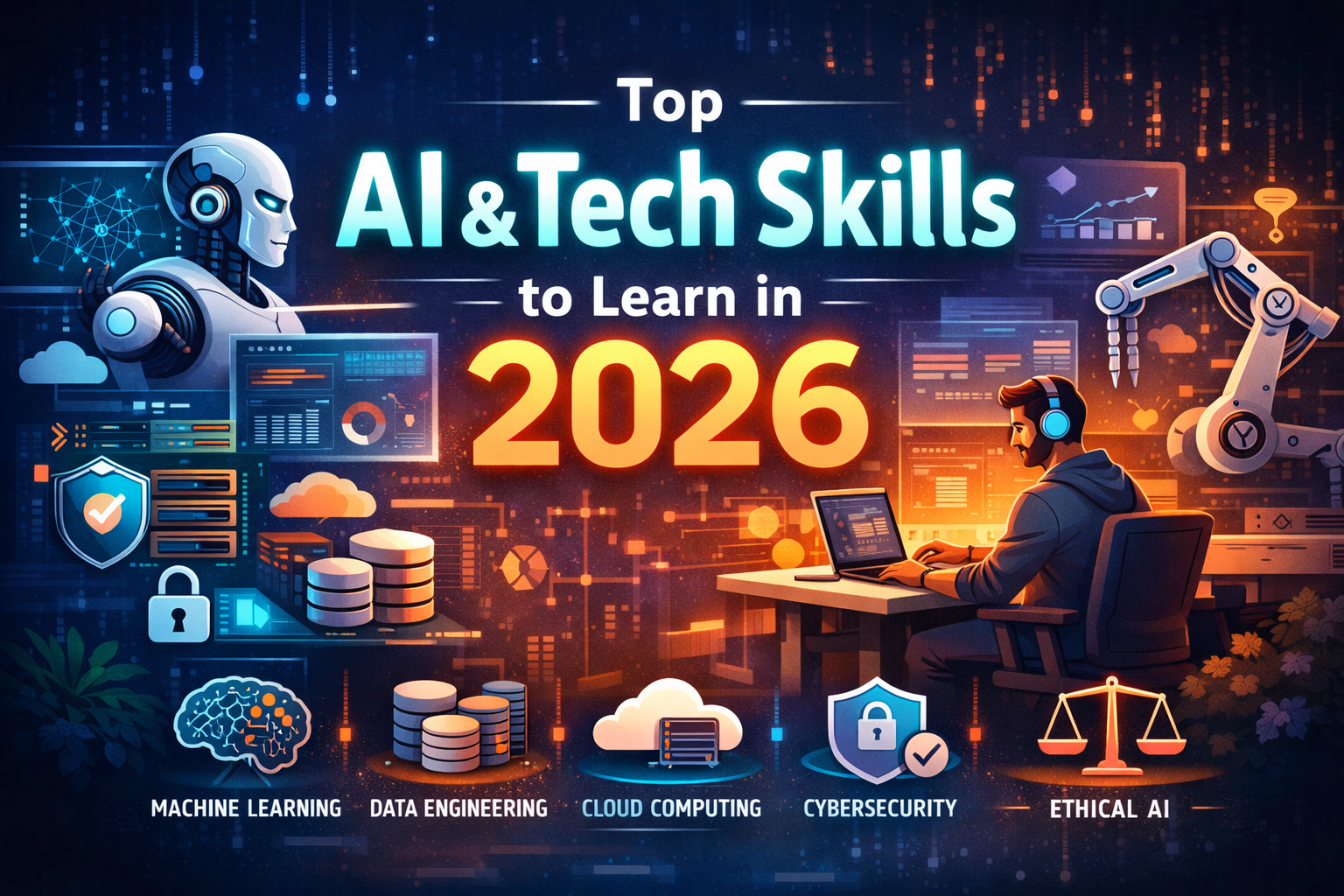
The technology landscape is evolving faster than ever, and AI and tech skills are becoming essential for developers, engineers, and anyone in the tech industry. In 2026, staying ahead in your career means learning skills that are in high demand, relevant to current trends, and applicable to real-world projects. Whether you are a beginner, an intermediate developer, or a seasoned engineer, understanding which skills to master will give you a competitive edge.
In this guide, we will explore the top AI and tech skills in 2026, why they matter, and how you can start learning them.
1. Artificial Intelligence and Machine Learning Basics
Artificial intelligence (AI) and machine learning (ML) continue to dominate the tech industry. These technologies are no longer niche; they are widely used in software development, data analysis, automation, and even cybersecurity.
Learning AI fundamentals such as supervised and unsupervised learning, neural networks, and natural language processing is crucial. Tools like Python, TensorFlow, and PyTorch are standard for building AI solutions.
Why AI Skills Are Important
- Automation: AI helps developers automate repetitive tasks like code generation, testing, and debugging.
- Data Insights: ML algorithms can identify patterns and provide insights that humans might miss.
- Career Opportunities: AI engineers and ML specialists are among the highest-paid roles in tech.
If you are looking to build a strong foundation, start with basic AI projects, such as chatbots, recommendation systems, or image classification. These projects will also help you create a portfolio to showcase your skills.
2. Data Engineering and Big Data Analytics
As companies generate more data than ever, data engineering and big data analytics are becoming critical skills. Understanding how to manage, process, and analyze data allows developers and engineers to make informed business decisions.
Key Data Engineering Skills
- SQL and NoSQL databases: Managing structured and unstructured data efficiently.
- ETL pipelines: Extracting, transforming, and loading data from multiple sources.
- Big Data Tools: Apache Spark, Hadoop, and Kafka for handling large datasets.
In 2026, being a data-savvy developer will set you apart. Combining data engineering with AI and machine learning will allow you to build smarter applications that rely on real-time insights.
3. Cloud Computing and DevOps Skills
Cloud platforms like AWS, Microsoft Azure, and Google Cloud are the backbone of modern applications. Learning cloud computing skills allows developers to deploy, scale, and maintain applications efficiently.
Additionally, DevOps is an essential skill for engineers who want to manage the entire software lifecycle. Modern DevOps practices now integrate AI for AIOps, which automates incident detection, predictive maintenance, and continuous deployment.
Important Cloud and DevOps Skills
- Infrastructure as Code (IaC): Tools like Terraform and Ansible.
- CI/CD Pipelines: Automating software delivery with Jenkins, GitHub Actions, or GitLab.
- Containerization and Orchestration: Docker and Kubernetes for scalable applications.
Learning cloud and DevOps skills in combination with AI will make you a highly sought-after tech professional, capable of building robust and intelligent systems.
4. Prompt Engineering and AI-Assisted Development
In 2026, AI-assisted development is no longer optional. Developers use AI tools to generate code, fix bugs, and optimize workflows. To leverage these tools effectively, learning prompt engineering is essential.
What Is Prompt Engineering?
Prompt engineering is the skill of writing effective inputs for AI models to produce the desired output. For example, a developer can prompt an AI code assistant to generate a function, refactor code, or create documentation.
Benefits of Learning Prompt Engineering
- Boost Productivity: Complete coding tasks faster using AI-powered tools.
- Reduce Errors: AI can catch common mistakes before they cause issues.
- Stay Current: AI-assisted development is becoming standard across the industry.
By mastering prompt engineering, you become capable of working efficiently with AI assistants and integrating them into your workflow.
5. Cybersecurity and Ethical AI
As technology advances, security and ethical AI practices are increasingly important. Developers must understand how to protect applications, data, and AI systems from vulnerabilities.
Essential Cybersecurity Skills
- Secure Coding Practices: Avoid common vulnerabilities such as SQL injection, XSS, and CSRF.
- Network Security Basics: Understand firewalls, VPNs, and intrusion detection.
- AI Ethics and Bias Mitigation: Ensure AI models are fair, transparent, and explainable.
Learning ethical AI practices will also help you align your projects with regulations and industry standards, making you a trusted professional in the tech ecosystem.
6. Soft Skills and Continuous Learning
While technical skills are critical, soft skills such as problem-solving, collaboration, and adaptability are equally important. In 2026, continuous learning is a must because technology evolves rapidly.
- Stay updated with new AI frameworks and libraries.
- Participate in developer communities and open-source projects.
- Practice coding challenges and real-world projects regularly.
These habits ensure that your AI and tech skills remain relevant and valuable in the long term.
How to Start Learning These Skills
- Online Courses and Tutorials: Platforms like Coursera, Udemy, and free educational resources offer structured learning paths.
- Hands-On Projects: Build small projects that incorporate AI, cloud, and DevOps skills.
- Certifications: Cloud certifications, AI certificates, and cybersecurity credentials enhance credibility.
- Networking and Mentorship: Connect with industry professionals and participate in hackathons.
By combining structured learning, practical experience, and networking, you can quickly master the top AI and tech skills in 2026.
Conclusion
The demand for AI and tech skills is stronger than ever in 2026. Developers and engineers who invest in learning AI, machine learning, data engineering, cloud computing, DevOps, prompt engineering, cybersecurity, and ethical AI practices will have a significant advantage in their careers.
Whether you are a beginner or an experienced professional, focusing on these skills will help you stay relevant, enhance productivity, and open doors to exciting career opportunities. Remember, technology evolves quickly, and continue,