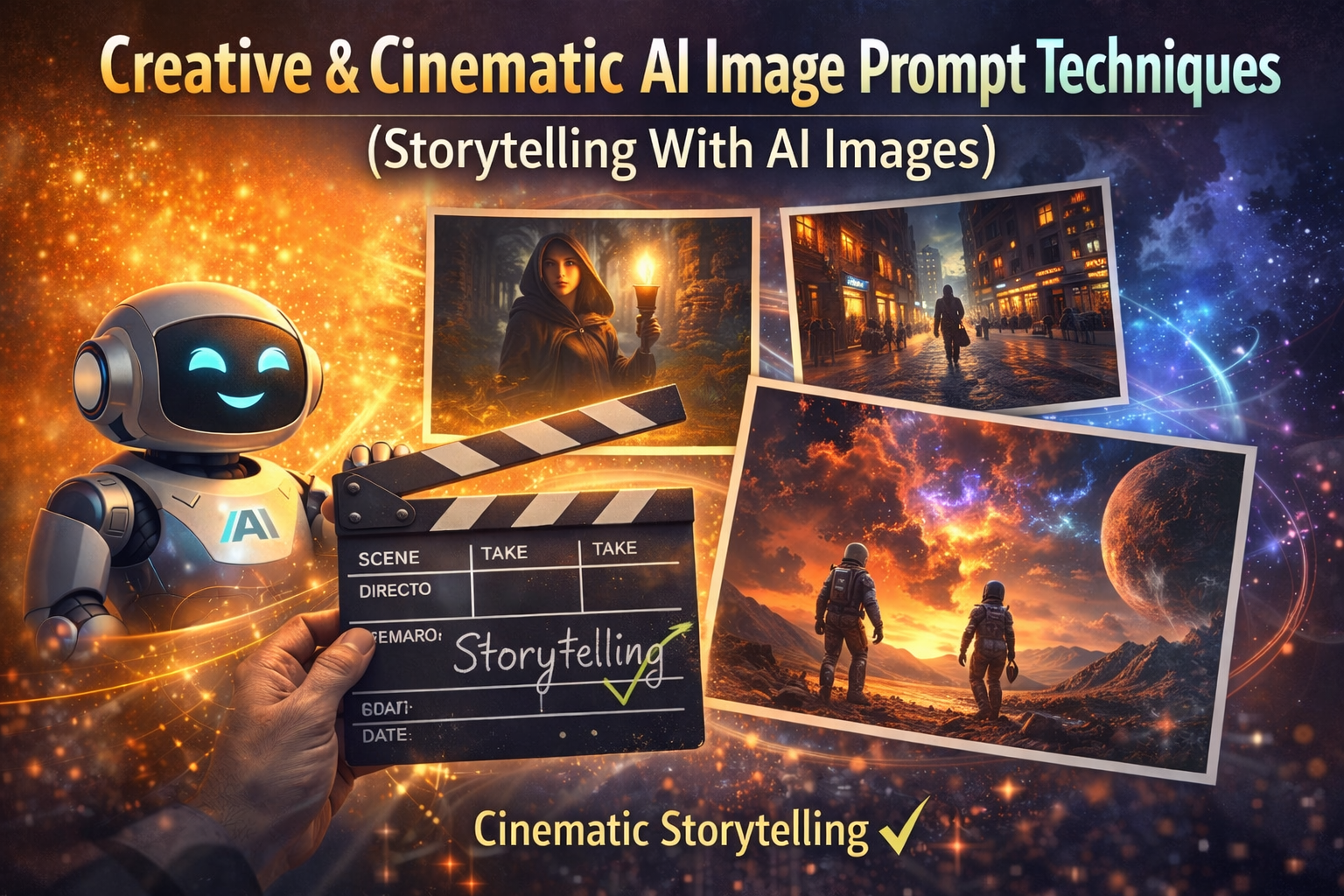
After learning how to create photorealistic AI images, the next level is creativity and storytelling. Cinematic AI image prompts go beyond realism. They aim to create images that feel like scenes from a movie, a trailer, or a powerful visual story.
Cinematic prompts are widely used for:
- Brand storytelling
- Social media visuals
- YouTube thumbnails
- Concept art
- Ad creatives
This article explains creative and cinematic AI image prompt techniques and shows how to turn static images into emotional, story-driven visuals.
What Makes an AI Image Cinematic
A cinematic image feels dramatic, emotional, and intentional. It often looks like a frame captured from a film.
Key cinematic qualities include:
- Strong lighting contrast
- Emotional atmosphere
- Story context
- Dynamic composition
- Intentional camera angles
Unlike standard photorealism, cinematic images are not neutral. They are expressive.
Difference Between Realistic and Cinematic Prompts
Photorealistic prompts aim for accuracy and natural appearance. Cinematic prompts aim for impact and emotion.
| Photorealistic | Cinematic |
|---|---|
| Neutral lighting | Dramatic lighting |
| Everyday scenes | Story-driven scenes |
| Documentary feel | Movie-like feel |
| Balanced exposure | High contrast |
This is why cinematic prompts often use dramatic lighting, strong moods, and scene descriptions.
Core Elements of Cinematic Prompting
To create cinematic AI images, your prompt should include the following elements.
1. Scene Description
Describe what is happening, not just what exists.
Example:
- standing alone in the rain
- walking through a dark alley
2. Mood and Emotion
Mood adds emotional depth.
Examples:
- dramatic
- mysterious
- emotional
- tense
3. Lighting Style
Lighting defines the cinematic look.
Examples:
- low-key lighting
- rim light
- backlight
- neon lighting
4. Camera Angle and Composition
Camera language enhances cinematic impact.
Examples:
- wide-angle shot
- close-up shot
- low-angle perspective
- shallow depth of field
5. Color Grading
Color grading separates cinematic images from normal photos.
Examples:
- teal and orange tones
- desaturated colors
- warm highlights, cool shadows
Cinematic Prompt Formula
A reusable cinematic prompt formula:
Subject + Scene + Mood + Lighting + Camera Angle + Color Style + Negative Prompts
Creative & Cinematic Prompt Examples
Example 1: Cinematic Portrait
Positive prompt:
A cinematic portrait of a man standing alone in the rain at night, dramatic mood, low-key lighting with strong shadows, close-up shot, shallow depth of field, teal and orange color grading

Negative prompt:
cartoon, illustration, anime, flat lighting, low contrast, text, watermark
Example 2: Movie Scene Style
Positive prompt:
A lone woman walking through a foggy street at night, cinematic atmosphere, moody lighting, wide-angle shot, dramatic shadows, desaturated color palette

Negative prompt:
bright lighting, cartoon style, illustration, low detail
Using Mood, Emotion, and Atmosphere
Cinematic prompts become powerful when mood and emotion are clearly defined.
Words that enhance atmosphere:
- foggy
- smoky
- rainy
- dusty
- glowing
Emotion-based prompts feel more human and engaging.
Emotion-Focused Prompt Example
A cinematic scene of a tired man sitting on a rooftop at sunset, emotional mood, warm backlight, wide shot, soft shadows
Camera Angles and Composition Techniques
Camera perspective changes how the viewer feels.
Common cinematic angles:
- Low-angle shot: power, dominance
- High-angle shot: vulnerability
- Close-up: emotion and intensity
- Wide shot: scale and isolation
Camera-Based Prompt Example
A cinematic wide-angle shot of a small figure standing in front of a massive futuristic city, dramatic lighting, epic scale
These techniques build directly on camera concepts introduced in Photorealistic AI Image Prompts.
Common Mistakes in Cinematic Prompting
- Ignoring story context
Cinematic images need a moment or scene. - Overusing style words
Too many effects reduce clarity. - Weak lighting description
Cinematic images depend heavily on lighting. - No negative prompts
Leads to flat or cartoonish results. - Confusing realism with cinematic style
Understanding structure from Basic Structure of an AI Image Prompt helps avoid these mistakes.
How Cinematic Prompts Lead to Advanced Prompt Engineering
Cinematic prompts naturally lead into advanced techniques such as:
- Prompt weighting for mood emphasis
- Multi-subject storytelling
- Scene consistency
- Image series generation
These techniques will be explored in Advanced Prompt Engineering Techniques, where cinematic control becomes repeatable.
Conclusion
Creative and cinematic AI image prompts allow you to move beyond basic image generation into storytelling. By focusing on scene, mood, lighting, camera angle, and color grading, you can create images that feel powerful, emotional, and professional.
This article builds on realism and prepares you for advanced prompt engineering. Cinematic prompting is especially valuable for marketing, branding, and visual storytelling.
In the next article, we will explore Tool-Specific Prompting: Midjourney vs Stable Diffusion vs DALL·E, where cinematic techniques behave differently across tools.