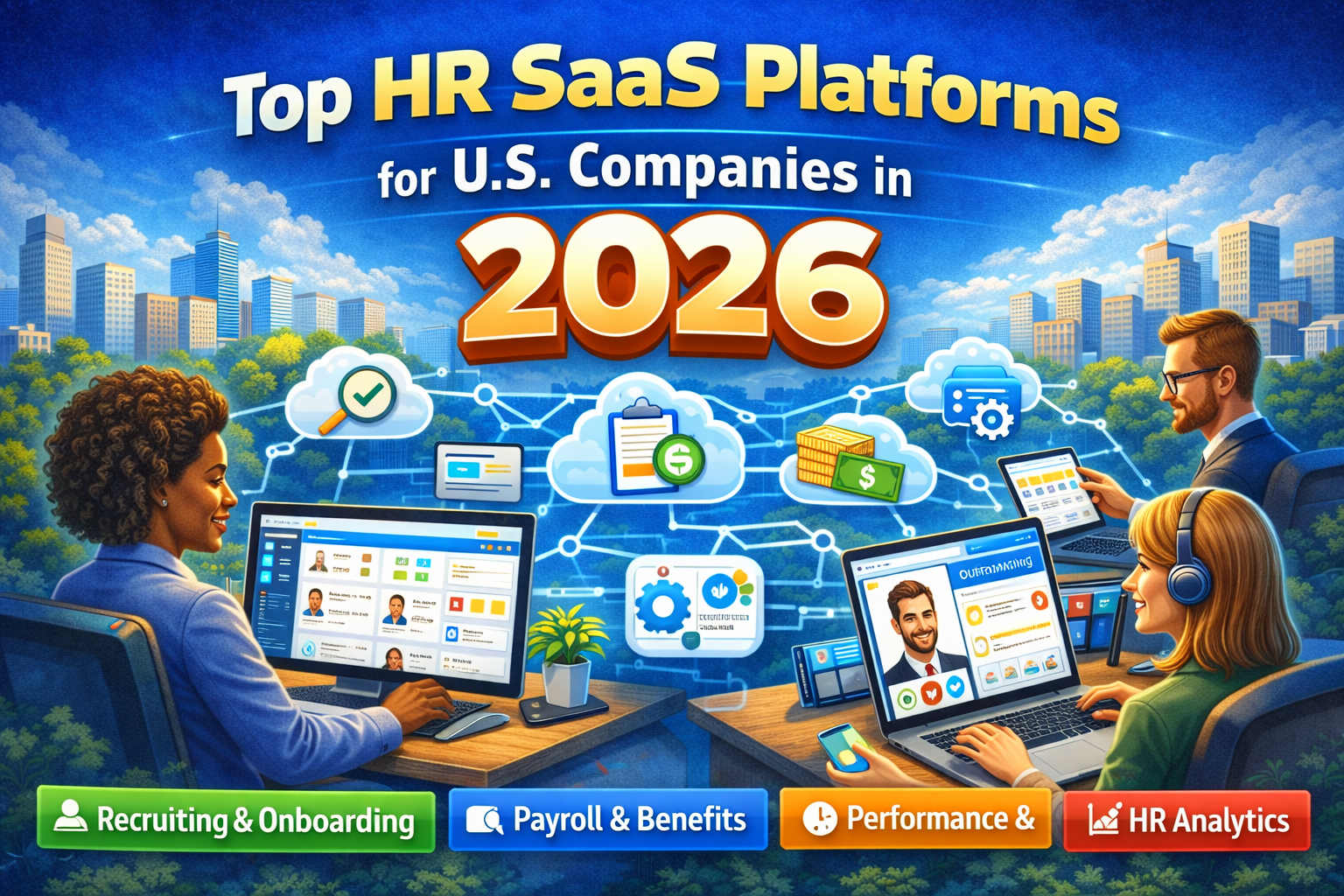
In 2026, human resource management has become more technology-driven than ever. U.S. companies are increasingly relying on HR Software-as-a-Service (SaaS) platforms to manage hiring, payroll, compliance, performance, and employee engagement in a centralized and scalable way. These cloud-based platforms help organizations reduce administrative burden, ensure regulatory compliance, and make smarter workforce decisions using real-time data.
From small businesses to large enterprises, HR SaaS platforms now play a strategic role rather than just an operational one. Below is a detailed look at the top HR SaaS platforms used by U.S. companies in 2026, along with their strengths and ideal use cases.
1. Workday Human Capital Management (HCM)
Best for Large Enterprises
Workday HCM is one of the most widely adopted enterprise-level HR SaaS platforms in the United States. It offers a unified system for core HR, payroll, talent management, workforce planning, and analytics.
Workday’s cloud-native architecture allows organizations to access real-time workforce data across departments. Advanced analytics and AI-driven insights help HR leaders with forecasting, talent optimization, and strategic planning. The platform is designed to handle complex organizational structures, global workforces, and strict compliance requirements.
Ideal for:
Large enterprises and multinational corporations with complex HR needs and large employee bases.
2. ADP Workforce Now
Best for Payroll and Compliance
ADP Workforce Now remains a trusted HR SaaS platform in 2026, especially for payroll processing and regulatory compliance. It supports payroll, benefits administration, time tracking, and core HR functions in one integrated system.
ADP is known for its accuracy in payroll calculations and its ability to handle multi-state and multi-location compliance requirements in the U.S. Automated tax filing, compliance alerts, and reporting tools make it a strong choice for businesses that prioritize risk reduction.
Ideal for:
Companies of all sizes that need dependable payroll processing and compliance management.
3. BambooHR
Best for Small and Mid-Sized Businesses
BambooHR is a popular HR SaaS platform among U.S. small and mid-sized businesses due to its simplicity and ease of use. It focuses on core HR functions such as employee records, onboarding, time-off tracking, and performance management.
The platform’s clean interface reduces training time for HR teams and employees. BambooHR also provides customizable reporting tools that allow businesses to monitor employee data and HR metrics effectively.
Ideal for:
Small and growing companies that want a user-friendly HR system without enterprise-level complexity.
4. Gusto
Best Payroll-First HR SaaS for SMBs
Gusto combines payroll, benefits, and basic HR tools into one easy-to-use cloud platform. In 2026, it continues to be a favorite among U.S. startups and small businesses.
Gusto automates payroll processing, tax filings, and benefits administration, reducing the need for manual intervention. Its transparent pricing and simple setup make it attractive for businesses with limited HR resources.
Ideal for:
Small businesses seeking straightforward payroll and HR automation.
5. Rippling
Best All-in-One HR and IT Platform
Rippling stands out in 2026 by combining HR, payroll, benefits, and IT management into a single SaaS platform. Beyond traditional HR features, Rippling allows businesses to manage employee devices, software access, and security permissions.
When an employee is hired or leaves the company, Rippling automatically updates payroll, benefits, and system access, reducing errors and saving time. This unified approach is particularly valuable for fast-growing and tech-focused companies.
Ideal for:
Tech companies and startups that want HR and IT operations managed in one system.
6. Paycom
Best for Payroll and Talent Management
Paycom offers a comprehensive HR SaaS solution that emphasizes employee self-service. Employees can manage payroll data, benefits, and time tracking directly, reducing HR administrative workload.
The platform includes tools for applicant tracking, onboarding, performance management, and payroll processing. Paycom’s focus on data accuracy and automation makes it a strong choice for mid-to-large organizations.
Ideal for:
Mid-sized businesses looking to consolidate payroll and talent management.
7. Paylocity
Best for Workforce Engagement
Paylocity provides a modern HR SaaS platform that combines payroll, benefits, learning management, and employee engagement tools. Its social-style interface helps companies foster collaboration and improve internal communication.
In 2026, Paylocity continues to stand out for its focus on employee experience, offering surveys, learning tools, and mobile access that support engagement and retention.
Ideal for:
Growing companies that want to improve workforce engagement alongside core HR functions.
8. HiBob (Bob)
Best for Modern and Distributed Workforces
HiBob, commonly known as Bob, is designed for companies with remote, hybrid, or global teams. It offers HR tools that support onboarding, compensation management, performance reviews, and employee engagement.
Bob’s analytics and reporting features help HR leaders understand workforce trends and improve decision-making. Its flexible structure makes it suitable for companies with evolving organizational models.
Ideal for:
Companies with distributed teams and modern workplace cultures.
9. Zenefits
Best Budget-Friendly HR SaaS
Zenefits provides essential HR features such as payroll, benefits administration, and compliance support at an affordable price point. It focuses on simplifying HR tasks for U.S. businesses without large HR departments.
The platform’s self-service tools allow employees to manage benefits and personal information easily, reducing administrative effort for HR teams.
Ideal for:
Budget-conscious small businesses that need core HR automation.
10. Oracle Fusion Cloud HCM
Best Enterprise-Grade HR Solution
Oracle Fusion Cloud HCM is a robust HR SaaS platform built for large and complex organizations. It covers talent management, workforce planning, payroll, and advanced analytics.
In 2026, Oracle continues to enhance its platform with AI-driven insights that support talent development and workforce optimization. Its deep integration capabilities make it suitable for enterprises already using Oracle’s cloud ecosystem.
Ideal for:
Large enterprises with complex HR, payroll, and global workforce requirements.
Key HR SaaS Trends in 2026
HR SaaS platforms in 2026 are shaped by several key trends:
- Increased use of AI for workforce analytics, hiring, and employee support
- Greater focus on employee experience and engagement
- Unified platforms that combine HR, payroll, and IT operations
- Cloud-first solutions that scale with business growth
- Stronger emphasis on compliance and data security
Conclusion
In 2026, HR SaaS platforms are no longer optional tools — they are essential systems that support business growth, compliance, and employee satisfaction. From payroll-focused solutions for small businesses to enterprise-grade platforms with advanced analytics, U.S. companies have a wide range of options to choose from.
Selecting the right HR SaaS platform depends on company size, workforce structure, and long-term goals. By investing in the right solution, businesses can streamline HR operations, enhance employee experiences, and gain a competitive edge in the modern workplace.